Simpson’s paradox
2025-10-02
Study design recap
What are the differences between observational studies and experimental studies?
What is a confounding variable?
UC Berkeley admissions
Observational study on sex bias based on Fall 1973 admissions data to the graduate program at the University of California, Berkeley
| Admit | Deny | Total | |
|---|---|---|---|
| Men | 3738 | 4704 | 8442 |
| Women | 1494 | 2827 | 4321 |
| Total | 5232 | 7531 | 12763 |
What is the probability* of admission for a randomly selected applicant?
What is the probability of admission among men? Among women?
Are the probabilities you found marginal, joint, or conditional probabilities?
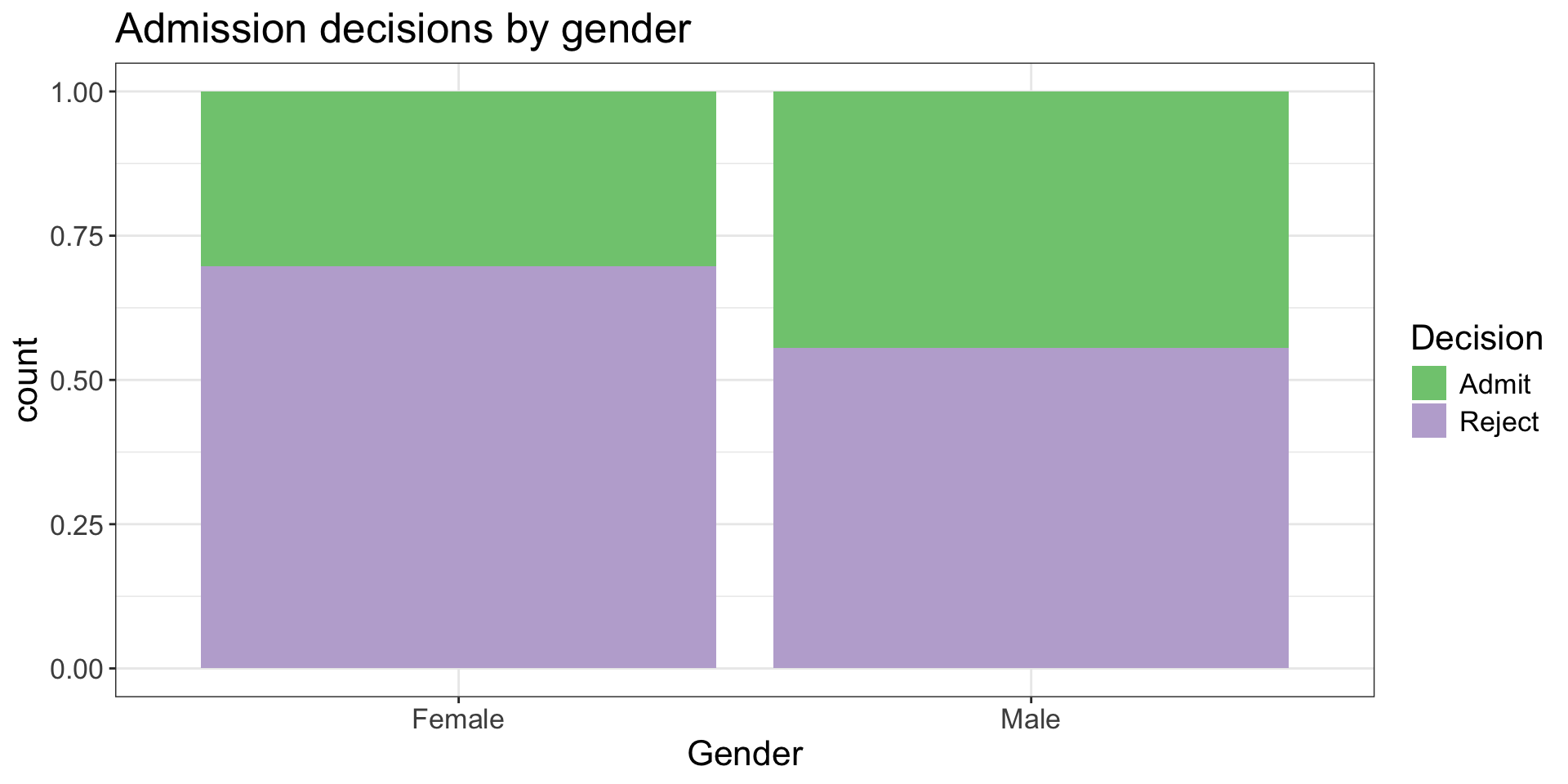
Suppose we want to understand the relationship between gender and admission decision. What sort of visualization might be appropriate for representing this data?
UC Berkeley admissions (cont.)
Case study
An application of probability!
Dive into data
We have more nuanced data about the graduate admissions: we know the department that each person was applied to.
We will consider the six largest departments: A, B, C, D, E, F
- The first six observations in the data frame are as follows:
What sort of EDA would be interesting/appropriate for these data?
Frequency tables
Number of applicants by department:
Female applicants:
| Dept | n |
|---|---|
| A | 108 |
| B | 25 |
| C | 593 |
| D | 375 |
| E | 393 |
| F | 341 |
Male applicants:
| Dept | n |
|---|---|
| A | 825 |
| B | 560 |
| C | 325 |
| D | 417 |
| E | 191 |
| F | 373 |
More-detailed frequency tables
Number of applicants by department and admission status:
Female applicants:
| Dept | Decision | n |
|---|---|---|
| A | Admit | 89 |
| A | Reject | 19 |
| B | Admit | 17 |
| B | Reject | 8 |
| C | Admit | 202 |
| C | Reject | 391 |
| D | Admit | 131 |
| D | Reject | 244 |
| E | Admit | 94 |
| E | Reject | 299 |
| F | Admit | 24 |
| F | Reject | 317 |
Male applicants:
| Dept | Decision | n |
|---|---|---|
| A | Admit | 512 |
| A | Reject | 313 |
| B | Admit | 353 |
| B | Reject | 207 |
| C | Admit | 120 |
| C | Reject | 205 |
| D | Admit | 138 |
| D | Reject | 279 |
| E | Admit | 53 |
| E | Reject | 138 |
| F | Admit | 22 |
| F | Reject | 351 |
Visualize
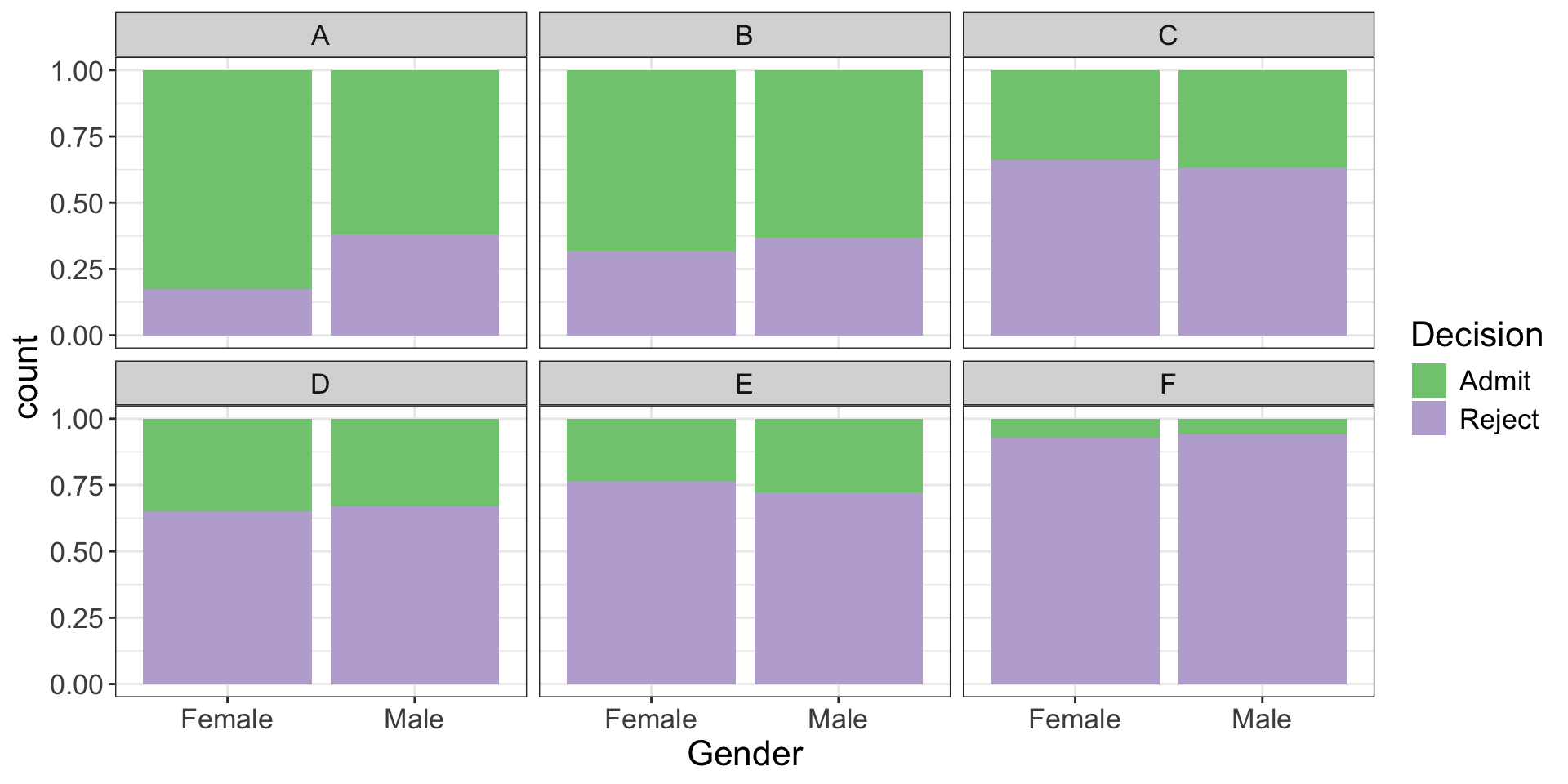
Can visualize three categorical variables at once!
Closer look
Probability of admission conditioning on gender and department:
| Dept | Gender | cond_prob_admit |
|---|---|---|
| A | Female | 0.82 |
| A | Male | 0.62 |
| B | Female | 0.68 |
| B | Male | 0.63 |
| C | Female | 0.34 |
| C | Male | 0.37 |
| D | Female | 0.35 |
| D | Male | 0.33 |
| E | Female | 0.24 |
| E | Male | 0.28 |
| F | Female | 0.07 |
| F | Male | 0.06 |
- Are all departments uniform in admission rates?
- Do admissions still seem biased against female applicants?
What’s going on?
But wait… didn’t we start by noting that men were way more likely to be admitted than women?
The first two departments (A and B) are easy to get into
The following table shows for each gender, the proportion of applicants each department received.
| Gender | Dept | cond_prop |
|---|---|---|
| Female | A | 0.059 |
| Female | B | 0.014 |
| Female | C | 0.323 |
| Female | D | 0.204 |
| Female | E | 0.214 |
| Female | F | 0.186 |
| Male | A | 0.307 |
| Male | B | 0.208 |
| Male | C | 0.121 |
| Male | D | 0.155 |
| Male | E | 0.071 |
| Male | F | 0.139 |
What do you notice?
Simpson’s paradox
The UC Berkeley admissions observational study is an example of Simpson’s paradox: when omitting one explanatory variable causes the measure/degree of association between another explanatory variable and a response variable to reverse or disappear
- In other words, the inclusion/exclusion of a third variable in the analysis can change the apparent relationship between the other two variables
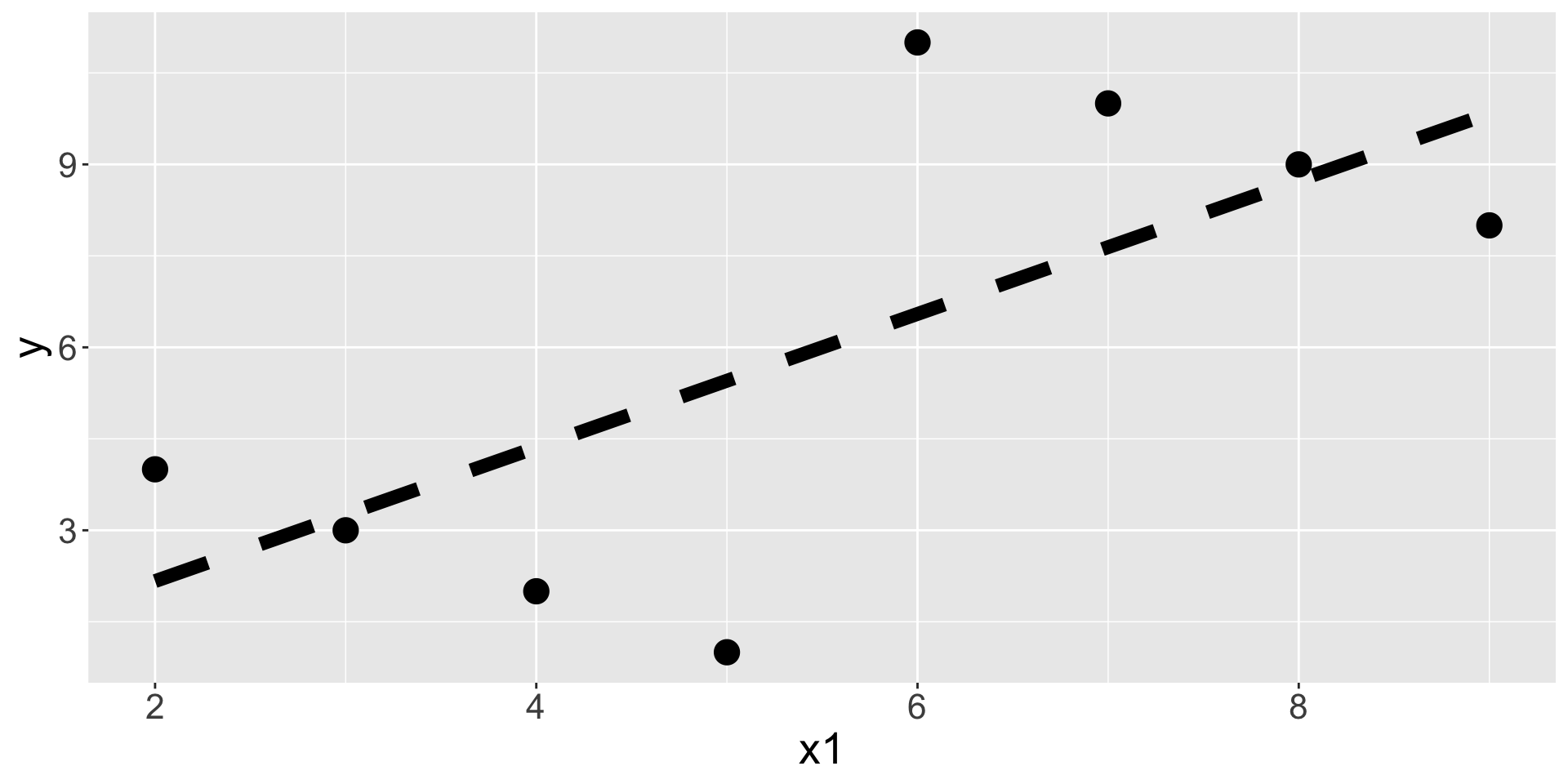
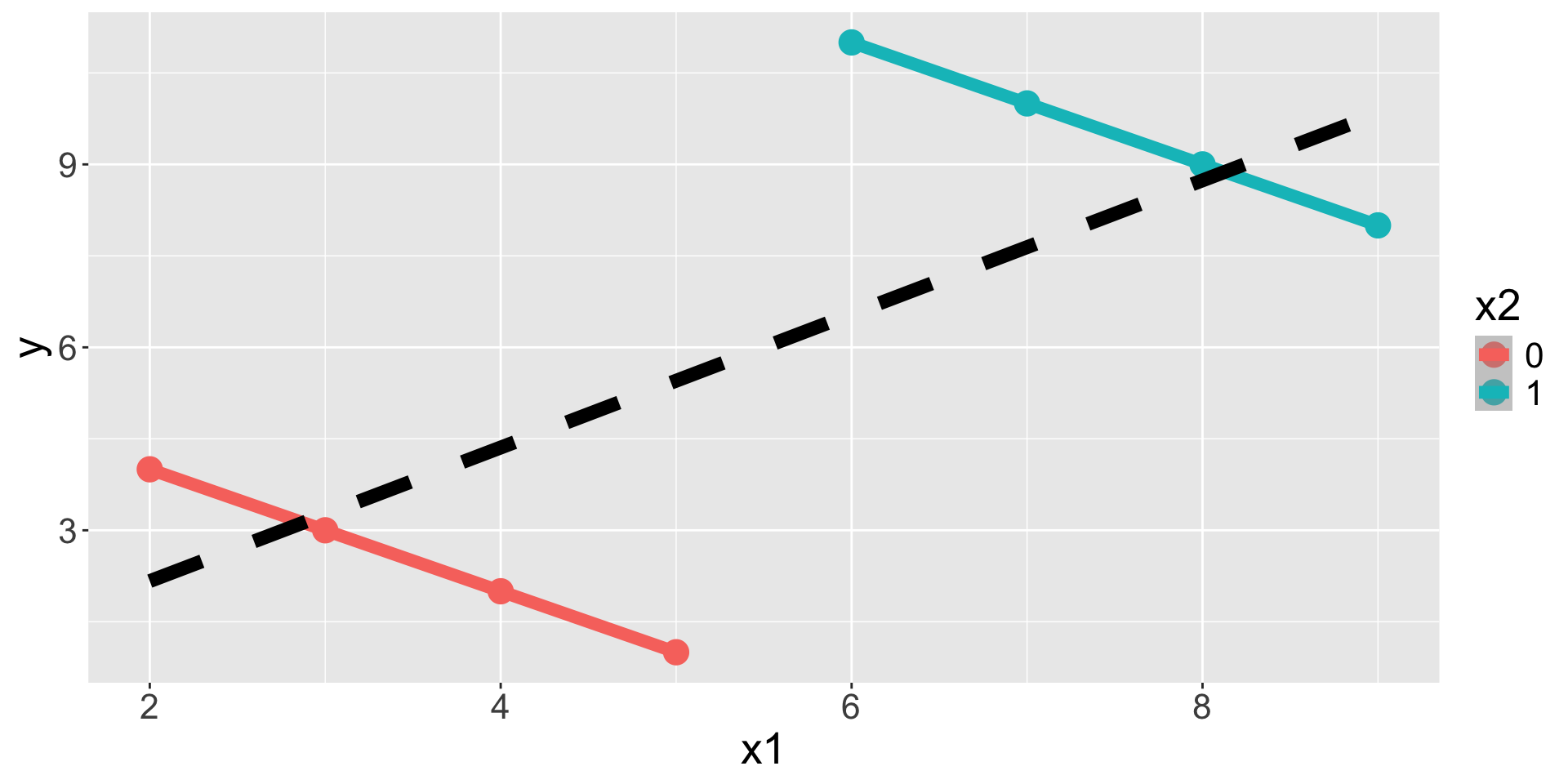
- What was the confounding variable in UC Berkeley study?
Live code
Using wrangling to obtain probabilities
case_when()to create more complex categorical variables
Wrangling for probabilities
What is the probability that someone was admitted?
What is the probability that someone was admitted, conditioned on gender?
- How might I extend to also condition on Department?
More complex categorical variables
Suppose I want to create a new variable called Dept2 that takes the values:
- “Group 1” if someone applied to Department A or B
- “Group 2” if someone applied to Department C or D
- “Group 3” if someone applied to Department E or F
# A tibble: 5 × 4
  Decision Gender Dept  Dept2
  <chr>    <chr>  <chr> <chr>
1 Reject   Female C     Group 2
2 Admit    Male   A     Group 1
3 Reject   Female E     Group 3
4 Reject   Male   B     Group 1
5 Reject   Female C     Group 2
case_when()
We will use the case_when() function which generalizes if_else(). We use the following notation: <logical condition> ~ <value of variable>. Different “ifs” are separated by commas, and the logical conditions are checked sequentially.
# A tibble: 5 × 4
  Decision Gender Dept  Dept2
  <chr>    <chr>  <chr> <chr>
1 Reject   Female C     Group 2
2 Admit    Male   A     Group 1
3 Reject   Female E     Group 3
4 Reject   Male   B     Group 1
5 Reject   Female C     Group 2
# A tibble: 5 × 4
Decision Gender Dept Dept2
<chr> <chr> <chr> <chr>
1 Reject Female C Group 2
2 Admit Male A Group 1
3 Reject Female E Group 3
4 Reject Male B Group 1
5 Reject Female C Group 2Prettier tables using kable()
When we finish wrangling, the output is always a data frame
While this is so useful for coding, it’s not the most beautiful when rendering!
How can we make turn the data frame into a beautiful table?
We will need to first install the
kableExtralibrary.